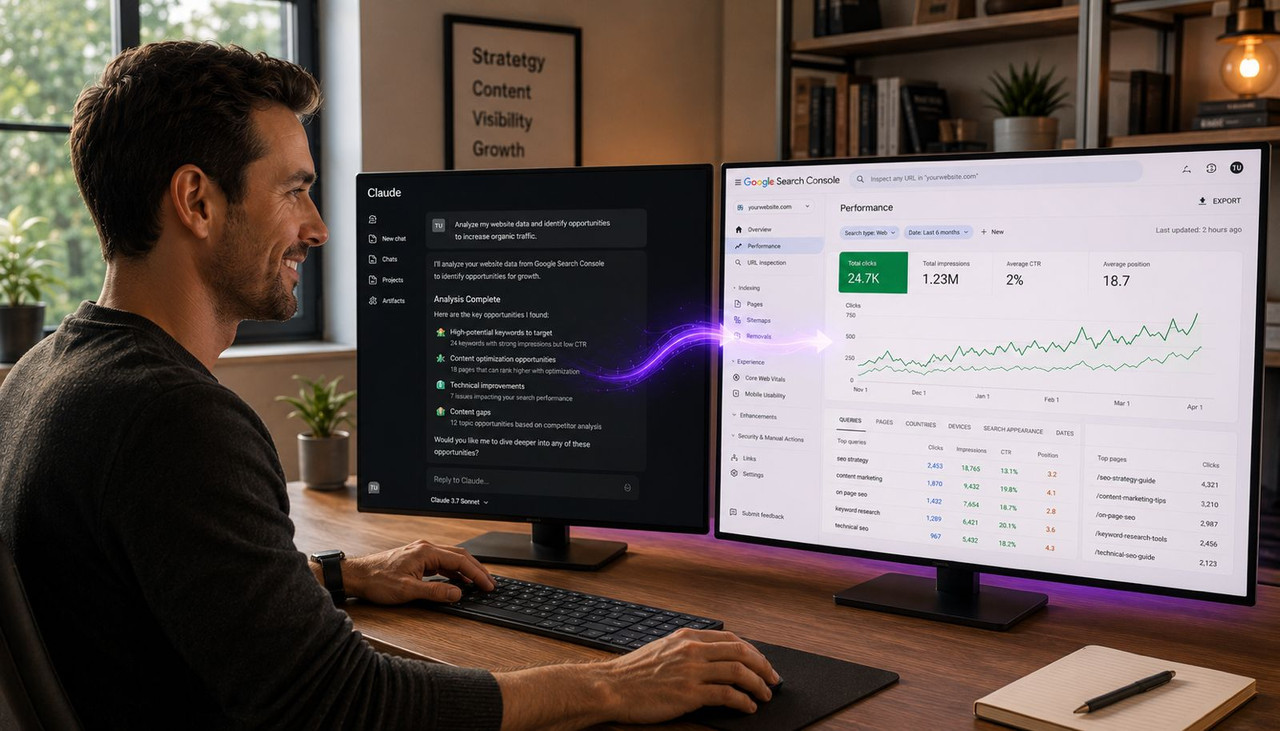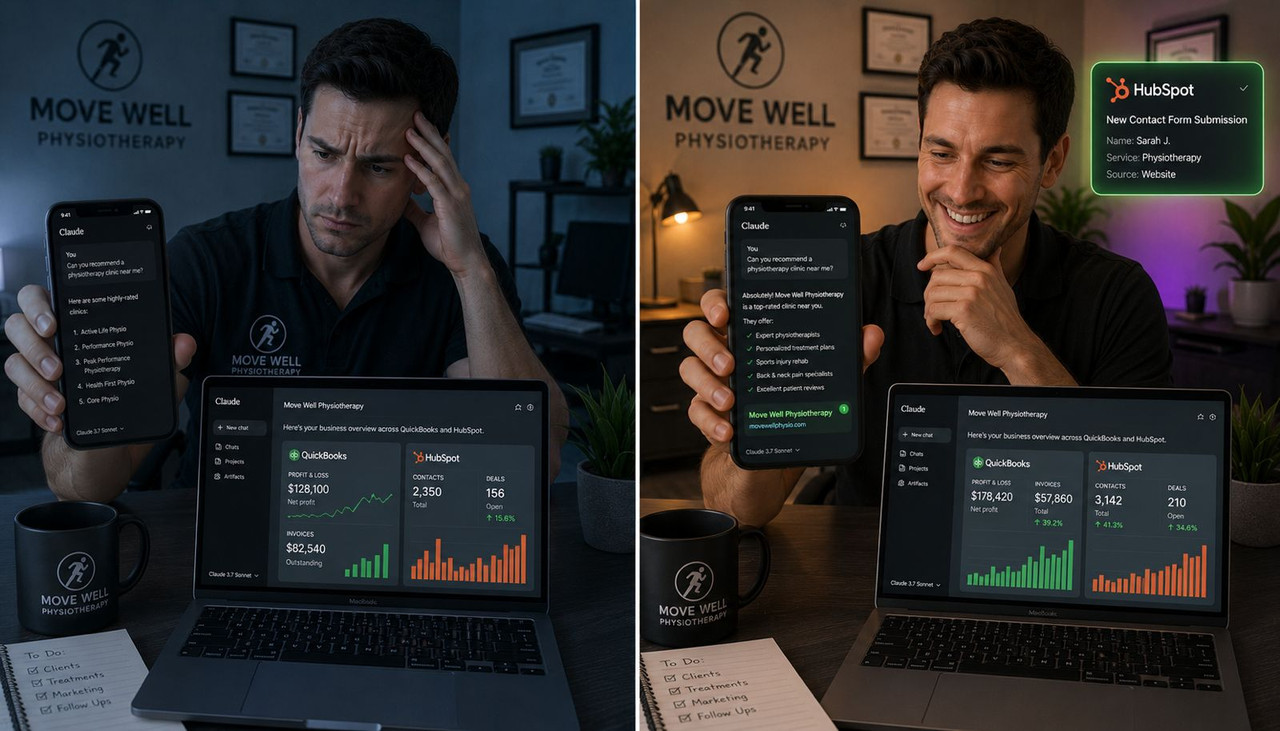
On May 13, 2026, Anthropic launched Claude for Small Business, embedding Claude directly inside QuickBooks, PayPal, HubSpot, Canva, DocuSign, Google Workspace, and Microsoft 365, the exact software stack the 33 million small businesses in America already run on every day. The detail almost every launch article has missed is this: Claude does not search the web the way ChatGPT or Google does. According to Profound's 2025 analysis, Claude retrieves through Brave Search with an 86.7% citation overlap, meaning your Google ranking has almost nothing to do with whether Claude can find and recommend you. Millions of small business owners are about to start asking Claude business questions daily inside the same tools where they already manage their books, their payroll, and their customer pipeline. If Claude cannot verify your business exists in Brave's index, you are now invisible inside a tool your own customers and competitors are using to run their operations. This guide explains exactly what changed on May 13 and the specific fixes that close the gap.
Key Takeaways
- According to Anthropic's official launch announcement, Claude for Small Business is a toggle inside Claude Cowork that connects directly to QuickBooks, PayPal, HubSpot, Canva, DocuSign, Google Workspace, and Microsoft 365, the core software stack used by the 33 million small businesses in the United States.
- According to Profound's 2025 analysis confirmed by TechCrunch in March 2025, Claude's web retrieval backend is Brave Search, with an 86.7% citation overlap between Claude's cited results and Brave's top organic results, a statistically significant correlation (p-value below 0.0001). ChatGPT, by contrast, shows only 26.7% alignment with its Bing backend.
- According to Search Engine Land's May 2026 reporting on Jonathan Clark's Zero Click by Profound session, Claude triggers a web search far less often than ChatGPT, using it in 36.6% of prompts compared to roughly 90% for ChatGPT, but location-focused prompts trigger Claude's search behavior 55% of the time and comparison prompts trigger it 51% of the time, the exact query types small business owners now ask Claude from inside their QuickBooks and HubSpot dashboards.
- According to Digital Applied's May 2026 analysis, Claude for Small Business carries no incremental subscription cost beyond an existing Claude Team or Enterprise plan, with HubSpot's connector marking the first CRM integration Claude has ever shipped.
- According to Erlin's dataset of 500 brands cited in Scalemee's local AI visibility research, brands with eight or more structured attributes across their digital presence get cited by Claude 4.3 times more often than brands with fewer than three structured attributes.
What Anthropic Actually Launched on May 13 and Why It Changes the Stakes
Claude for Small Business is a package of 15 prebuilt agentic workflows and connectors to QuickBooks, PayPal, HubSpot, Canva, DocuSign, Google Workspace, and Microsoft 365, designed to run inside Claude Cowork rather than as a separate pricing tier. According to Anthropic's launch announcement, the product handles payroll planning by settling QuickBooks cash position against incoming PayPal payments, closing the month by reconciling books and writing a plain-English profit and loss summary, and running marketing campaigns by analyzing HubSpot performance and generating Canva assets. Daniela Amodei, Anthropic's co-founder and president, framed the launch directly: small businesses make up nearly half the American economy but have never had the resources of bigger companies, and AI is the first technology that can finally close that gap.
This is not a chatbot add-on. It is Claude becoming the operating layer inside the daily software stack of millions of business owners. According to Digital Applied's detailed May 2026 review, the connector library at launch includes Square, Stripe, Slack, Gmail, Google Drive, Google Calendar, and Webflow on top of the seven headline integrations, making HubSpot's connector the first CRM integration Claude has ever shipped. Owners on a Claude Team plan starting at $25 per seat can toggle the feature on and connect the same logins they already use every day, a setup closer to authorizing a Zapier integration than installing new software.
Here is the part the launch coverage missed entirely. Every business owner now running QuickBooks payroll forecasts and HubSpot campaign analysis through Claude is also a person who will ask Claude business questions in the exact same session. "What CRM should I switch to." "Find me a bookkeeper near me." "Who handles immigration consulting for my employee's visa." "What is the best local marketing agency for a business my size." Claude is no longer a separate browser tab someone opens occasionally. It is now sitting inside the financial and operational core of millions of businesses, which means the businesses Claude recommends inside that environment get a direct line to a buyer who is already mid-task and ready to act. Understanding how to get your local business on ChatGPT and Claude in 2026 covers the full framework for the exact trust signals Claude evaluates before naming a business, which now matters substantially more given where Claude lives.
Why Claude Runs on Brave Search and Why That Makes Google Rankings Irrelevant to Claude Citations
Claude's web retrieval backbone is Brave Search, not Google and not Bing. This single architectural fact determines whether your business can ever be recommended inside Claude for Small Business, regardless of how well you rank anywhere else. According to Profound's 2025 analysis, confirmed by TechCrunch in March 2025, the citation overlap between Claude's responses and Brave's top organic results is 86.7%, a correlation statistically far beyond random coincidence. By contrast, ChatGPT shows only 26.7% alignment with its Bing backend, meaning Claude's dependency on a single search provider is unusually tight and unusually predictable.
The practical consequence is uncomfortable for any founder who has invested in Google SEO and assumed it covers Claude. A page can rank third on Google and be completely absent from Brave's top 20 results for the same query. According to Mersel AI's March 2026 Claude tracking guide, your Brave Search visibility now determines your Claude citation eligibility more directly than your Google rankings ever could. Brave maintains a smaller, independently crawled index with its own ranking signals, including diverse cross-domain authority and semantic structure signals that do not map one-to-one onto Google's algorithm.
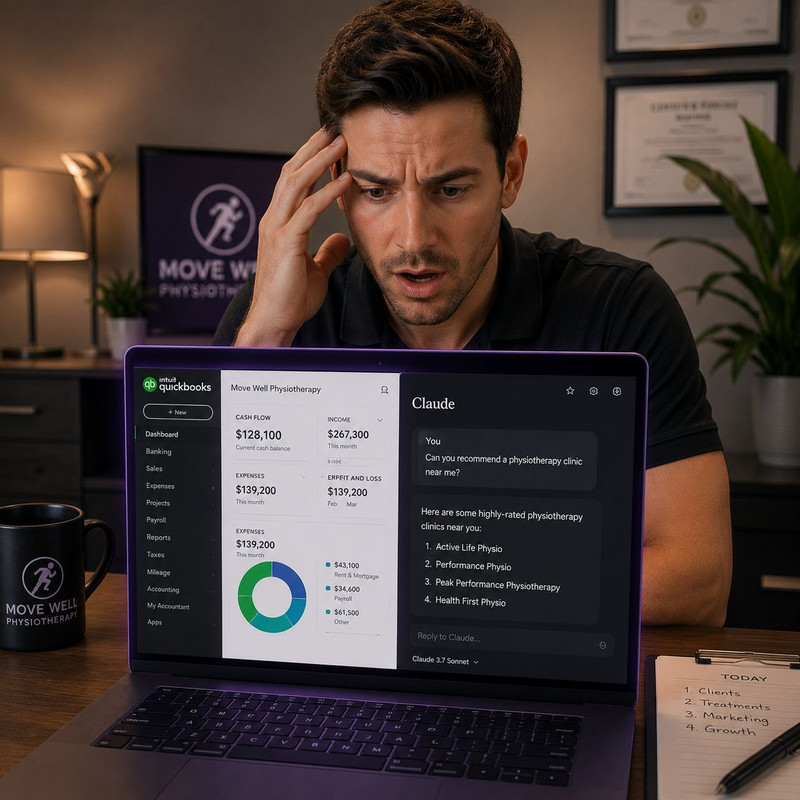
According to Search Engine Land's May 2026 reporting, Claude does not re-rank Brave's search results the way other AI engines sometimes filter and reorder what they find. It largely uses Brave's top results directly, which means Brave rank performance is a measurable, testable proxy for whether Claude can find your business at all. The same reporting found Claude's citations overlapped with ChatGPT's results in only 8% of cases, confirming that ChatGPT visibility work does not transfer to Claude visibility in any meaningful way. A business that has spent a year optimizing for ChatGPT citations may have built almost none of the signals Claude actually requires.
Why Claude for Small Business Multiplies the Cost of Being Invisible to Brave Search
Before May 13, being invisible to Claude meant missing one AI engine among several a customer might check. After May 13, being invisible to Claude means missing recommendations inside the exact tool millions of small business owners now open every single workday to run payroll, chase invoices, and plan campaigns. The behavioral shift is not theoretical. According to Self Employed's coverage of the launch, the named workflows target exactly the late-night work most solopreneurs already do themselves, which means owners are now spending substantially more time inside a Claude-powered interface than they spent in a standalone chat window.
This changes the query pattern that matters for small businesses specifically. According to Search Engine Land's reporting on Claude's search trigger behavior, comparison prompts such as "X versus Y" trigger a Claude web search 51% of the time and location-focused prompts trigger search 55% of the time. A small business owner inside Claude for Small Business managing their QuickBooks close is now one follow-up question away from asking "who is a better bookkeeper for a business my size near me" or "compare immigration consulting firms for employee sponsorship in my city," and Claude answers that question by querying Brave, not by recalling what it already knows. If your business is not indexed and ranked in Brave for those exact comparison and location queries, you are structurally excluded from that recommendation moment regardless of your reputation, your years in business, or your Google ranking.
The competitive dynamic this creates is also new. Every business that adopts Claude for Small Business is simultaneously a potential customer asking Claude for recommendations and a business that should want to be the recommendation Claude gives to someone else. According to Digital Applied's pricing analysis, a typical solo owner's full software stack costs roughly $1,500 a year when paired with Claude for Small Business at no incremental subscription cost, which removes the cost barrier to adoption and accelerates how quickly this becomes the default environment millions of owners work inside daily through the rest of 2026.
The Exact Fix: How to Make Your Business Findable Inside Claude for Small Business
Closing the gap between your business and Claude's citation eligibility requires three specific actions, and none of them touch Google SEO directly. The first and fastest fix is checking your Brave Search visibility today. Go to search.brave.com and search your brand name, your primary service keywords, and the comparison terms a customer would use, such as "best [your category] near [your city]." If your pages do not appear in Brave's top 10 for queries where you already rank on Google, you have a Brave indexing gap that is directly excluding you from Claude for Small Business recommendations. Submit your sitemap to Brave's webmaster tools and build a small number of links from sources Brave indexes heavily, including niche industry publications and recognized directory listings in your category.
The second fix is structuring your content the way Claude's retrieval pipeline actually reads it. According to PrimeAIcenter's 2026 Claude ranking research, citation happens at the passage level, not the page level, which means a single well-structured paragraph can earn a citation from an otherwise mediocre page while a dense, unextractable page full of good information can be read and never credited. Every section on your most important pages needs the direct answer in the first 40 to 75 words, followed by a specific, named, dated fact. PrimeAIcenter's research also found that content acknowledging limitations and trade-offs receives a documented 1.7 times citation boost over purely promotional language, which means a comparison page that fairly states where your service is and is not the right fit performs better with Claude than a page that only makes confident claims.
The third fix is verifying your robots.txt explicitly allows ClaudeBot and Claude-SearchBot, alongside the established list of GPTBot, OAI-SearchBot, and PerplexityBot. Many website templates block AI crawlers by default without the owner realizing it, which means a business can do everything else correctly and still be invisible because a single technical setting silently excludes the crawler that would otherwise find them. For founders and small business owners who need this combination of Brave-optimized structure, named credentials, and consistent entity data published across their site without managing a separate technical and editorial workflow, automated SEO platforms that connect keyword research to structured content generation and direct website publishing, Scalemee being one built specifically for this AI citation workflow, handle the content layer that passes the specific extractability and entity tests Claude applies before recommending a business. Understanding what makes a business website trustworthy to ChatGPT covers the broader trust signal architecture that Claude evaluates alongside Brave indexability before naming any business as the answer.
What Small Businesses Should Test This Week Before the Next Claude Update
The fastest way to know where your business currently stands is to run the exact test a customer would run. Open Claude, enable web search, and ask the comparison and location questions your real customers ask: "best [your service] in [your city]," "[your category] near me," and "compare [your business type] options for a small business." Note whether your business appears, what language Claude uses to describe you if it does, and which competitors appear instead if it does not. Then run the same three queries in search.brave.com directly and compare which URLs rank. The gap between what shows up in Brave and what Claude cites tells you exactly how close you are to the recommendation layer that now sits inside QuickBooks, HubSpot, and Microsoft 365 for millions of small business owners.
According to Scalemee's research on sustained AI citation building, single optimized pages earn occasional citations, but consistent publishing clusters on a specific topic over months build the compounding topical authority that produces reliable, repeated citations across both Brave-driven Claude results and Google-driven results simultaneously. A business that starts this audit and fix process now, while most competitors are still unaware that Claude runs on a completely different search backend than ChatGPT, has a genuine first-mover window before the rest of its category catches up. Understanding how to get cited by ChatGPT with a brand new website and no backlinks covers the parallel framework for building citation eligibility from zero existing authority, which applies directly to the Brave-specific gap most small businesses currently have for Claude.
Frequently Asked Questions About Claude for Small Business and AI Citations
What exactly did Anthropic launch on May 13, 2026 and does it cost extra?
Anthropic launched Claude for Small Business on May 13, 2026, a toggle inside Claude Cowork rather than a new pricing tier. It bundles 15 prebuilt agentic workflows and connectors to QuickBooks, PayPal, HubSpot, Canva, DocuSign, Google Workspace, and Microsoft 365. According to Digital Applied's May 2026 analysis, it carries no incremental subscription cost beyond an existing Claude Team plan starting at $25 per seat or an individual Claude Pro plan at $20 per month. The connected business tools continue to be billed separately by their own vendors as they always were.
Does Claude really use Brave Search instead of Google to find businesses to recommend?
Yes, confirmed. TechCrunch reported in March 2025 that Anthropic uses Brave's search index as Claude's web retrieval backend, and Anthropic later added Brave Search to its official subprocessor list. Profound's 2025 analysis verified an 86.7% citation overlap between Claude's cited results and Brave's top organic results, a correlation confirmed at statistical significance well below a p-value of 0.0001. ChatGPT, by contrast, shows only 26.7% alignment with its Bing backend, and Claude's citations overlap with ChatGPT's in only 8% of cases according to Search Engine Land's May 2026 reporting.
Why does Claude for Small Business living inside QuickBooks and HubSpot matter for my business getting recommended?
Because millions of small business owners are now spending substantially more time inside a Claude-powered interface during their daily payroll, invoicing, and marketing tasks than they ever spent in a standalone chat window. Search Engine Land's May 2026 reporting found comparison prompts trigger a Claude web search 51% of the time and location-focused prompts trigger it 55% of the time. A business owner managing their books inside Claude for Small Business is one follow-up question away from asking Claude to compare or locate a service provider, and Claude answers that question through Brave Search, not from memory. If your business is not indexed in Brave for those queries, you are structurally excluded from that exact recommendation moment.
How do I check if my business is even visible to Claude right now?
Search your business name, your primary service keywords, and comparison phrases like "best [category] near [city]" directly in search.brave.com and check whether your pages appear in the top 10 results. Then ask Claude the same comparison and location questions a real customer would ask, with web search enabled, and note whether your business appears and what language Claude uses to describe it. The gap between what ranks in Brave and what Claude actually cites tells you precisely how close your business is to appearing inside the recommendation layer now embedded in Claude for Small Business.
Does optimizing for ChatGPT citations also help me get cited by Claude?
Not reliably. According to Search Engine Land's May 2026 reporting on Claude's citation behavior, Claude's results overlap with ChatGPT's in only 8% of cases, because the two engines run on entirely different search backends, Brave for Claude and Bing for ChatGPT. A business that has spent significant effort building ChatGPT visibility may have built almost none of the specific signals Claude requires. Claude-specific optimization means prioritizing Brave Search rankings, diverse third-party authority sources Brave weighs heavily, and content structured for passage-level extraction rather than page-level summarization.
What kind of content does Claude actually prefer to cite for a small business?
According to research cited by Oltre.ai analyzing 2,170 Claude-cited URLs, Claude favors deep, well-structured blog and documentation-style pages over homepages and cites almost no mainstream news or social platforms directly. PrimeAIcenter's 2026 research found that content acknowledging limitations and trade-offs receives a documented 1.7 times citation boost over purely promotional language, and that citation happens at the passage level, meaning a single well-structured paragraph with a direct answer and a named, dated fact can earn a citation even from a page that is not otherwise optimized.
How quickly can a small business start appearing in Claude citations after fixing Brave visibility?
Brave indexing changes from new authoritative links and sitemap submission typically begin influencing Claude's retrieval candidate set within two to four weeks, broadly consistent with how search index updates propagate. Content structure fixes, specifically rewriting section openings to deliver the direct answer first with named sources, show citation movement faster because they change what Claude can extract from a page Brave already indexes, rather than waiting for a new crawl cycle. Businesses starting from zero Brave presence should expect a longer runway, similar to building authority signals for any new search index, typically extending across several months of consistent, structured publishing.
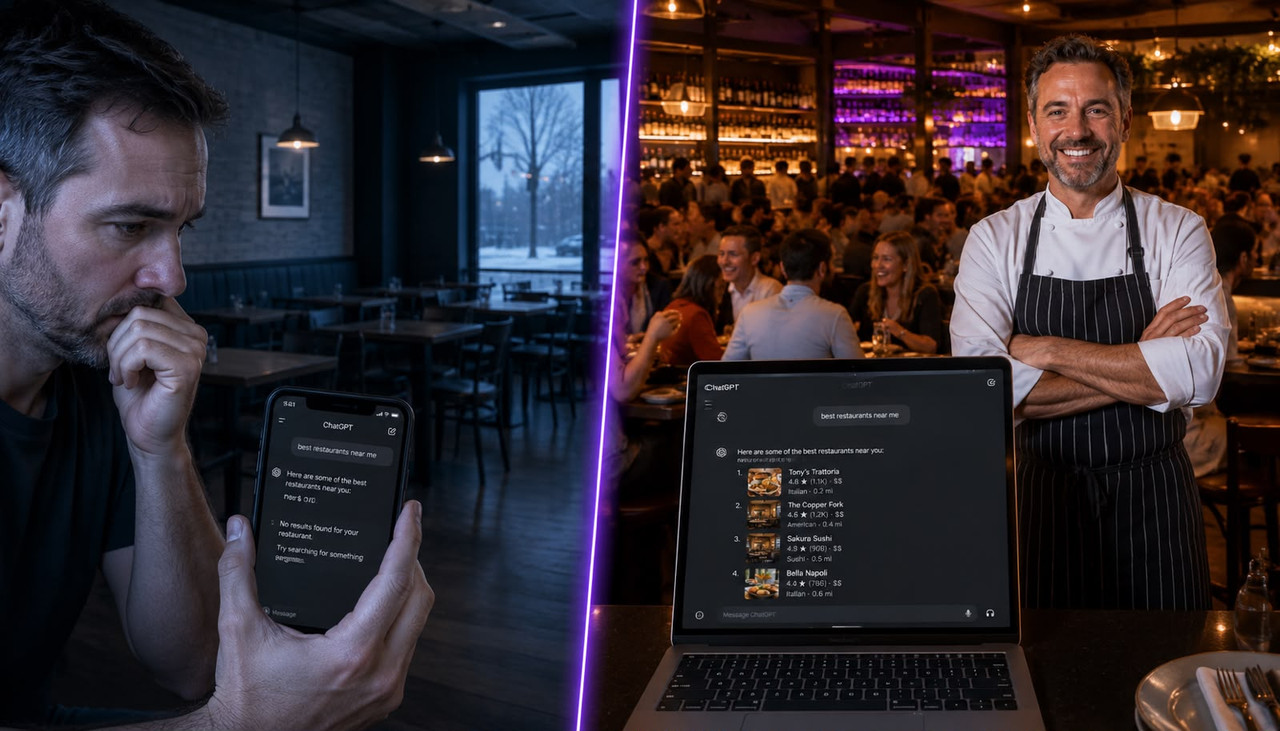
Claude for Small Business did not just add another AI tool to the market. It moved Claude's recommendation engine directly into the software millions of business owners already trust with their money, their customers, and their daily operations. Check your Brave Search visibility this week using the exact comparison and location queries your customers ask, and fix the gap before the rest of your category notices that Claude runs on a completely different index than Google or ChatGPT ever did.
.jpg)