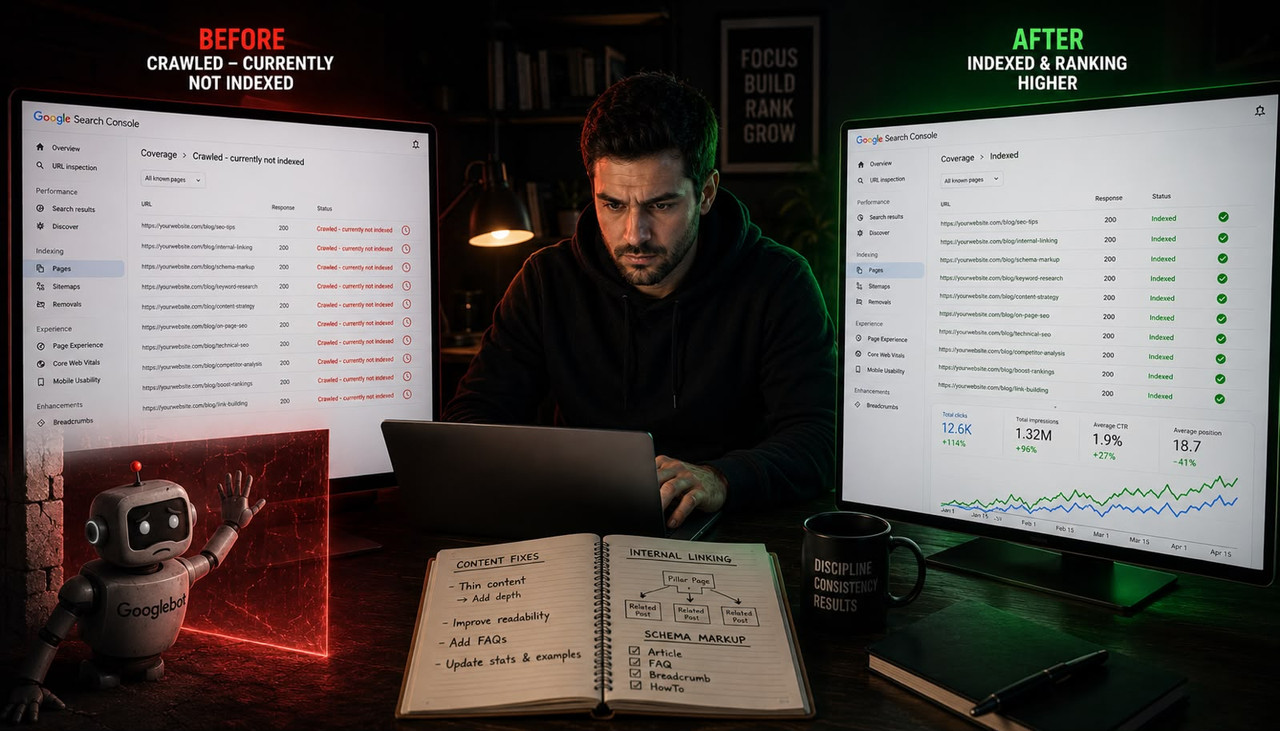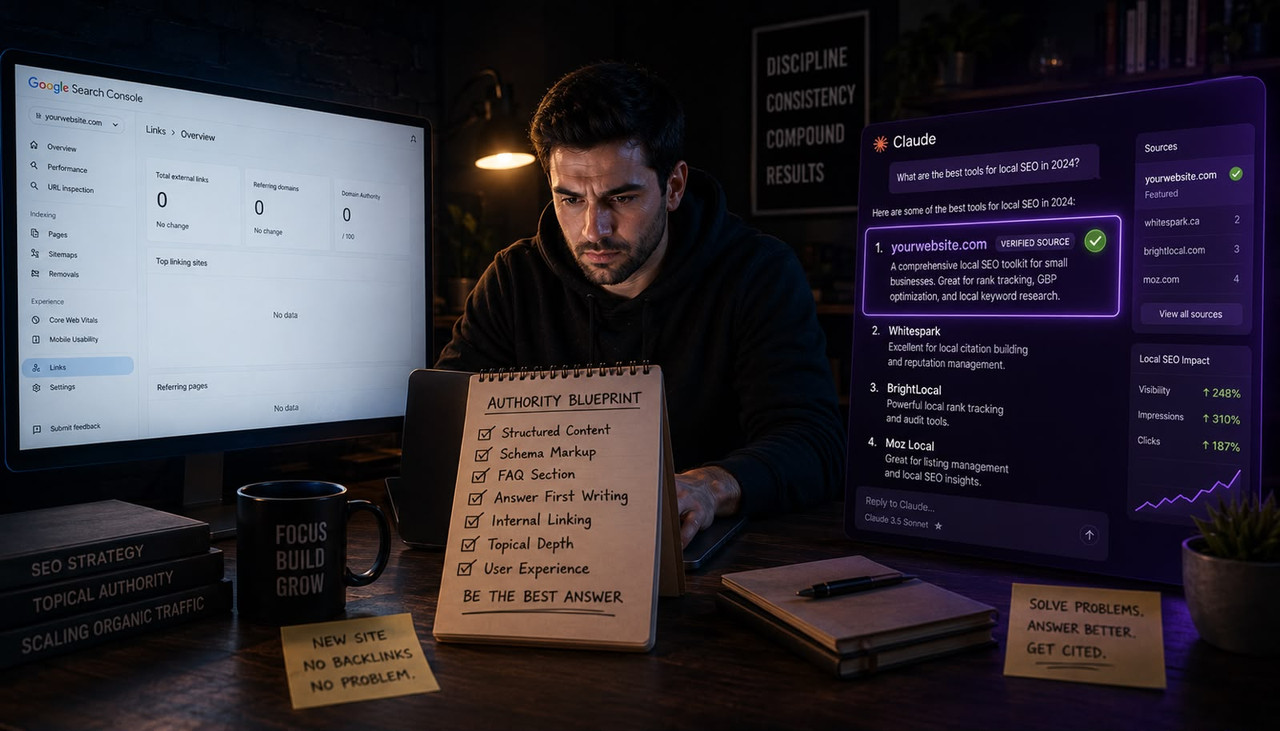
To get mentioned by Claude when you have no backlinks, submit your most important pages to Brave Search's URL submission form, write answer-first content with a named author and Article schema, allow Claude-SearchBot and Claude-User in your robots.txt, and make your entity signals consistent across every platform where your business appears. In July 2026, SEO consultant Raouf Douihech asked Claude with web search enabled what it knew about his name. It cited LinkedIn and some directories but not his website, despite that site ranking on Google and Bing for his own name. He checked search.brave.com zero results for his domain. He submitted his homepage through Brave's URL form that evening. The next day, Claude cited his site as the first source for the same query. According to Douihech's July 2026 documented test, no other variable moved between those two responses: no content edited, no backlink earned, no tag added. The only difference between invisible and first source was presence in the Brave Search index. That single test contains more practical information about how Claude citations actually work than most SEO guides written in 2026.
Key Takeaways
- According to Raouf Douihech's July 2026 documented test, submitting a homepage to Brave Search's URL form produced a Claude first-citation in under 24 hours with zero backlinks, zero new content, and zero technical changes made to the page. The only prerequisite was that the page contained a clear, direct answer to the question Claude received.
- According to PrimeAIcenter's test of 18 pages across three domains, pages that moved from position 18 to position 6 on Brave Search started getting cited by Claude within weeks, even without backlinks or domain authority increases. This confirms that Brave Search ranking position is a more direct predictor of Claude citation than traditional domain authority.
- According to Otterly.ai's citation study of 379,321 Claude citations, the Brand category spans 10,842 distinct domains and the single most-cited brand domain accounts for under 3% of all brand citations. The top 10 brand domains together make up only 13% of the category. No brand owns Claude's attention, and the field is wide open for challengers with zero existing domain authority.
- According to Erlin's 2026 Claude citation research, when Article schema explicitly declares a named author entity, Claude cites the content with 94% confidence compared to 61% for plain text claims with no author markup. A named author with a linked LinkedIn profile is a more powerful citation signal for Claude than most backlink profiles on new sites.
- According to MERJ's July 2026 deep technical analysis of Brave's indexing system, Brave has no sitemap submission system and no Search Console equivalent. New sites that rely on passive discovery can sit outside the Brave index for months. Manual URL submission through Brave's form is the only reliable way to accelerate indexing for a new or low-traffic site.
- According to ClickRank's March 2026 Claude citation analysis, Claude evaluates content at the passage level rather than the domain level. A focused page that answers a specific question clearly can earn a Claude citation even if your domain has modest authority, because Claude is evaluating whether each section of your page can be extracted as a standalone answer, not whether your domain has a high authority score.
Why Claude Does Not Care About Your Backlinks the Way Google Does
Claude does not rank pages the way Google does. Google's algorithm was built on the insight that a page linked to by many other high-quality pages is probably trustworthy. Backlinks are Google's primary trust signal because they represent third-party endorsement at scale. Claude does not use that logic. According to Erlin's 2026 Claude citation research, Google rewards keyword relevance and backlink volume. Claude rewards something closer to verifiable credibility: named authors, primary data, structured content, and source diversity. A brand with high domain authority but no structured facts, no author attribution, and no third-party validation will be invisible to Claude even if it ranks number one on Google.
The mechanism behind this is Claude's retrieval architecture. When Claude performs a live web search, it queries Brave Search's index, pulls candidate pages, and then evaluates each page at the passage level to determine whether a specific section answers the query directly and completely. According to Arfadia's June 2026 Claude citation guide, Anthropic respects robots.txt closely and keeps no preferred-publisher list, so this is a genuinely level field where clean execution and quality decide who gets cited. There is no whitelist of high-authority domains that automatically earn citation priority. There is no blacklist of low-authority domains that get automatically excluded. Every page that is indexed in Brave, allowed by robots.txt, and structured to deliver a direct answer in the first passage is in the citation candidate set regardless of backlink count.
According to RivalHound's April 2026 analysis, Claude's citations match Brave Search's top results 86.7% of the time. The strategy that gets your site into Brave's top results for low-competition niche queries is the same strategy that earns Claude citations, and it does not require building backlinks first. On Brave, competition is structurally lower than on Google because far fewer sites are deliberately optimizing for Brave's index. A new site with one well-structured page answering a specific niche question can outrank established high-authority domains on Brave for that exact query, because Brave's ranking signals weight content structure, freshness, and directness more heavily than pure link authority. For the full picture of why Claude's Brave Search dependency changes the entire optimization approach for new sites, why Claude cites Reddit and LinkedIn over your website covers how Claude's specific retrieval architecture differs from every other AI engine and what it means for your content decisions.
Step 1: Submit Your Pages to Brave Search Today — This Is the Zero-Backlink Fast Track
Submitting your site to Brave Search's URL form is the single highest-leverage action a site with no backlinks can take to earn Claude citations, and it takes five minutes. According to MERJ's July 2026 technical analysis of Brave's indexing system, Brave has no sitemap submission system and no equivalent of Google Search Console. New sites that rely on passive discovery can sit outside the Brave index for months because Brave's crawler relies heavily on the Web Discovery Project, an opt-in data collection system inside the Brave browser that reports pages visited by its users. A new site with no Brave browser traffic simply does not exist in Brave's passive discovery system regardless of how good its content is.
The submission process: go to search.brave.com and search for your domain using the site: operator — for example, site:yourdomain.com. If zero results appear, your site is not in Brave's index and Claude cannot find it regardless of content quality. Go to brave.com/search/submit/ and submit your homepage URL through the form. Repeat this for each important page you want Claude to be able to cite: your most important service page, your best blog post, and your about page if it contains specific entity information about your business. According to Douihech's documented test, indexing his homepage took under 24 hours. According to MERJ's technical research, page-by-page manual submission through Brave's URL form is the most reliable acceleration method for sites with low traffic and zero existing Brave index presence. There is no batch submission option, no sitemap upload, and no crawler ping available — submit each important URL individually, prioritizing the pages that most directly answer the questions your target customers ask Claude.
After submitting, verify indexing by checking site:yourdomain.com on search.brave.com daily until your pages appear. Once indexed, test whether Claude can now find you by opening Claude with web search enabled and asking a question that your submitted page directly answers. If your page appears in Claude's citations, your Brave submission worked. If it does not appear despite being indexed in Brave, the next issue is content structure, which the following sections address.
Step 2: Write One Page That Passes Claude's Passage-Level Extraction Test
Claude cites at the passage level, not the page level. This is the most important structural insight about how Claude citations work for new sites with no backlinks, because it means a single well-written section on a single page can earn a citation regardless of what the rest of the site looks like. According to EZY.ai's July 2026 Claude citation guide, a small business with one genuinely useful, well-structured FAQ section can out-cite a large brand with a vague 2,000-word think piece, because Claude is evaluating individual sections of your page, not your overall domain authority.
The passage structure that passes Claude's extraction test has five components. First, the direct answer appears in the first 40 to 75 words of the section, not after setup or context. Second, the answer names a specific fact, number, timeframe, or outcome rather than describing a general concept. Third, each claim that could be verified is attributed to a specific named source with a date in the same sentence — not "research shows" but "Otterly.ai's July 2026 study of 379,321 citations found." Fourth, the section is self-contained: someone reading only that passage, with zero context from the rest of the page, gets a complete and useful answer. Fifth, the section heading is phrased as the exact question a real person would type into Claude, not as a label or category name.
According to Pipeline Velocity's Claude SEO guide, Claude is more likely to trust a site that consistently covers a topic with depth. If your website has one thin article about your category, it is less likely to be cited than a site with five interconnected articles forming a topical cluster. For a new site with no backlinks, the minimum viable content structure that produces Claude citations is three to five pages on the same topic cluster, each with the direct answer first and each internally linking to the others. This cluster structure signals topical authority at the site level even when the domain itself has zero external link authority.
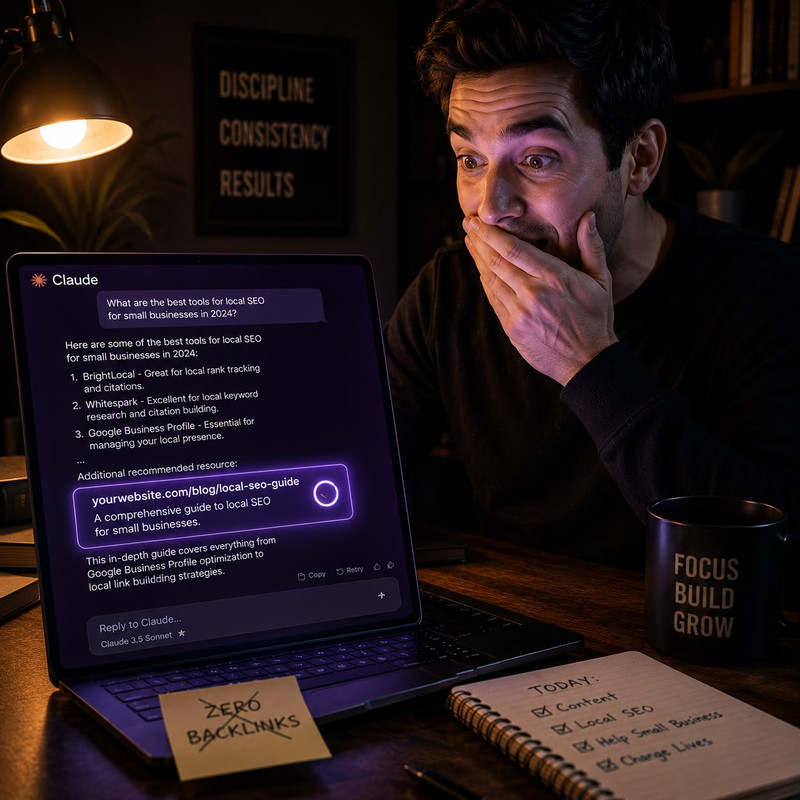
Step 3: Add a Named Author With Article Schema to Every Page You Want Cited
The named author requirement is the most commonly missed Claude citation signal on new sites, and it has the single highest per-action impact of anything on this list. According to Erlin's 2026 research, when Article schema explicitly declares an author entity, Claude cites the content with 94% confidence. For plain text claims with no author markup and no named attribution, that confidence drops to 61%. That 33-point gap is not a minor optimization. It is a structural prerequisite that new sites are uniquely positioned to fix because it requires zero backlinks, zero domain authority, and zero budget.
The named author for Claude citation purposes means a specific individual, not a brand name, not a team attribution, and not an anonymous byline. The individual needs a publicly visible LinkedIn profile whose stated expertise matches the subject of the content. The Article schema on the page needs to declare that individual as the author with a name field and a sameAs link pointing to their LinkedIn profile or personal website. This tells Claude's Constitutional AI verification layer that a verifiable human expert with a traceable professional identity wrote the content, which is the trust signal that separates citable content from content Claude treats as unverifiable. According to PrimeAIcenter's testing, pages with proper schema markup receive 1.8 times more citations than pages with Article schema alone — meaning FAQPage schema on top of Article schema with named authorship is the combination that produces the highest citation rate.
For a new site with no backlinks trying to earn its first Claude citation, this schema-plus-named-author combination is the closest thing to a citation shortcut that exists. It does not require any external validation, any link-building, or any existing domain authority. It requires one person's name, their LinkedIn URL, and 30 minutes to implement the JSON-LD in the page's head. According to Arfadia's June 2026 guide, writing the page a careful researcher would trust means a clear, deep answer, written by a named expert, backed by primary data, corroborated elsewhere, and coded cleanly. The named author and schema are the "coded cleanly" part of that requirement that most new site owners implement last but should implement first. For the complete walkthrough of how content structure and named authorship work together to pass Claude's citation test, how to make Claude recognize your business as a trusted option covers the full four-layer trust system that applies at every stage of a site's authority development including the zero-backlink stage.
Step 4: Allow Claude's Crawlers and Check Your robots.txt Right Now
The fastest way a new site silently fails to get Claude citations despite having good content and Brave index presence is a robots.txt rule blocking Claude's crawlers. According to RivalHound's April 2026 analysis, many sites have overly restrictive robots.txt rules — such as a broad User-agent: * Disallow: / — or Cloudflare Super Bot Fight Mode settings that treat Claude-SearchBot and Claude-User as malicious scrapers and block them at the network level. The result is that Claude's crawler sends a request to your server, receives a block, and moves on to the next candidate source with no error message visible anywhere in your analytics.
Claude operates two distinct crawlers that require separate rules. Claude-SearchBot is Anthropic's indexing crawler that builds Claude's internal knowledge of your site over time. Claude-User is the live fetch crawler that retrieves specific pages in real time when Claude performs a web search during a conversation. Both need to be explicitly allowed. Type your domain followed by /robots.txt into a browser right now and look for any Disallow rules that cover these user agents or that use a wildcard that would catch them. Add these two lines to your robots.txt if they are not already present: User-agent: Claude-SearchBot with Allow: / on the next line, and User-agent: Claude-User with Allow: / on the following line. If you are using Cloudflare, check your WAF and Bot Fight Mode settings specifically, because Cloudflare's default bot protection often blocks Claude's crawlers at the firewall level even when your robots.txt appears to permit them. According to a BuzzStream study from January 2026 cited by MERJ, 71% of publishers who block at least one AI training bot also accidentally block at least one retrieval or search bot, removing themselves from AI-powered search citations in the process.
Also verify that Brave's own crawler, BraveSofware/Bot, is allowed in your robots.txt. Since Brave Search is Claude's retrieval backend, blocking BraveSofware/Bot means Brave cannot index your pages regardless of whether you submitted them manually, and Claude cannot find content that Brave has not indexed. Automated SEO platforms that connect keyword research to structured, answer-first content generation with named authorship and direct website publishing, Scalemee being one built specifically for this AI citation workflow, ensure the robots.txt configuration, Article schema, and content structure that passes Claude's citation tests are all applied correctly from the first post you publish, without requiring a separate technical audit after the fact.
The 5-Day Action Plan for Getting Your First Claude Citation With Zero Backlinks
The following five-day sequence is based on the specific actions that produce first Claude citations fastest for sites with zero backlinks, ordered by the speed at which each action produces results. None of these steps require a budget, a backlink, or an existing audience.
Day 1: Check site:yourdomain.com on search.brave.com. If zero results appear, submit your homepage and your two most important pages through Brave's URL submission form at brave.com/search/submit/. Check your robots.txt for any rules blocking Claude-SearchBot, Claude-User, or BraveSofware/Bot and remove them. If you have Cloudflare, disable Bot Fight Mode or add Claude's crawlers to the allowlist.
Day 2: Rewrite the first paragraph of your most important page so the direct answer to the page's primary question appears in the first two sentences. Not setup. Not context. The answer first. Then add the specific named source, year, and number for every claim on that page that currently has vague attribution like "research shows" or "studies suggest."
Day 3: Add Article schema to your most important page with a named author field pointing to a real individual's LinkedIn profile. Add FAQPage schema with three to five questions phrased exactly as someone would type them into Claude, each with a self-contained 50-word answer. Validate the schema at search.google.com/test/rich-results before publishing.
Day 4: Standardize your entity signals. Check that your business name, description, service category, and location read identically on your website, your Google Business Profile, your LinkedIn company page, and any directory where your business appears. According to EZY.ai's July 2026 research, if your services and description say one thing on your site and another on a directory listing, Claude has no confident picture of your business and quietly leaves you out.
Day 5: Open Claude with web search enabled and ask the exact question your most important page answers. If your site appears in the citations, your strategy is working. If it does not appear, check whether your Brave index submission has been processed by searching site:yourdomain.com on search.brave.com. If the page is indexed but not cited, the issue is content structure — run the isolation test on your opening paragraph: could someone read only that paragraph and get a complete useful answer? If not, rewrite it until yes. For the complete picture of how Google traffic and Claude citations have decoupled into separate visibility systems, why your website gets Google traffic but zero AI citations explains exactly why the steps above produce Claude results that zero additional Google optimization would achieve.
Frequently Asked Questions About Getting Mentioned by Claude With No Backlinks
Can a brand new website with zero backlinks actually get cited by Claude in 2026?
Yes, and a documented real-world case from July 2026 proves it. SEO consultant Raouf Douihech submitted his homepage to Brave Search's URL form one evening and Claude cited his site as its first source for a query about his name the following morning, with zero backlinks earned and zero content changed between the two Claude responses. The prerequisite was that his page contained a direct answer to the query Claude received. According to Otterly.ai's study of 379,321 Claude citations, the top 10 brand domains account for only 13% of brand citations — meaning no domain owns Claude's attention and a new site with one well-structured page is in genuine competition for the remaining 87%.
Why does Claude cite some pages with no backlinks while ignoring high-authority pages?
Because Claude evaluates content at the passage level rather than the domain level. According to EZY.ai's July 2026 Claude analysis, a small business with one genuinely useful, well-structured FAQ section can out-cite a large brand with a vague 2,000-word think piece. Claude is evaluating whether the first 40 to 75 words of each section deliver a complete, standalone answer to the query — not whether the domain has a strong backlink profile. A new site where every section opens with the direct answer, names a specific source for every claim, and has Article schema with a named author is more citable by Claude's evaluation criteria than a high-authority site where answers are buried in paragraph three with no author attribution.
How do I submit my site to Brave Search to get Claude to find it?
Go to search.brave.com and type site:yourdomain.com to check whether your site is already indexed. If zero results appear, go to brave.com/search/submit/ and submit your homepage URL through the form. Repeat for each important page individually — your most important service page, your best structured content page, and your about page. Brave has no sitemap submission system and no Search Console equivalent, so page-by-page manual submission is the only reliable way to accelerate indexing for a new site. According to Raouf Douihech's July 2026 documented test, indexing happened in under 24 hours for a homepage submitted through this form. Claude citation followed within the same 24-hour window once the page was indexed.
Does Claude use Google to find websites or does it use a different search engine?
Claude uses Brave Search as its web retrieval backend, not Google and not Bing. This has been confirmed through independent technical analysis by multiple researchers in 2025 and 2026. Anthropic added Brave Search to its official subprocessor list in March 2025, and research by Profound confirmed an 86.7% overlap between what Claude cites and Brave's top organic results. The direct implication for sites with no backlinks is significant: Google domain authority does not transfer to Brave ranking. A page can rank well on Google and be completely absent from Brave's index, making it invisible to Claude entirely regardless of content quality.
What is the single most important thing I can add to my page to get Claude to cite it?
A named author with Article schema that links to a verifiable LinkedIn profile. According to Erlin's 2026 Claude citation research, Article schema with a declared author entity produces 94% citation confidence from Claude compared to 61% for content with no author markup — a 33-point gap driven entirely by one structural addition that costs nothing and requires no backlinks. The author must be a specific named individual, not a brand or team attribution, with a publicly visible LinkedIn profile whose stated expertise matches the content. This single addition to your most important page is the highest-leverage action available for a new site trying to earn its first Claude citation.
How long does it take to get a first Claude citation after submitting to Brave Search?
In Raouf Douihech's July 2026 documented case, the first Claude citation appeared within 24 hours of Brave Search index submission for a homepage with a clear, direct answer to the relevant query. PrimeAIcenter's testing found that pages moving to better Brave ranking positions started getting Claude citations within weeks. The fastest path is: submit to Brave's URL form, ensure the page has answer-first structure with a named author and Article schema, allow Claude-SearchBot and Claude-User in your robots.txt, and test by asking Claude the exact question your page answers. Results in under 48 hours are achievable for a well-structured page with a clear niche query that has limited existing competition in Brave's index.
Will Claude eventually find my site without Brave Search submission if I just keep publishing?
Eventually, but it can take months. According to MERJ's July 2026 technical analysis of Brave's indexing system, Brave's passive discovery relies primarily on the Web Discovery Project, which reports pages visited by Brave browser users who have opted into anonymous data sharing. A new site with no Brave browser traffic — which is most new sites — can sit outside the Brave index for months without manual submission, because there are no users visiting it through Brave to trigger passive discovery. Manual URL submission is the only reliable acceleration method. Waiting for passive discovery while your content goes uncited by Claude is the mistake most new site owners make because they assume Brave works like Google, which actively crawls the entire web continuously.
Does my website need to be old or established for Claude to trust it enough to cite it?
No. According to Arfadia's June 2026 Claude citation guide, Anthropic keeps no preferred-publisher list and respects robots.txt equally across all domains. Claude does not have a minimum domain age requirement, a minimum domain authority threshold, or a minimum page count requirement before it will cite a site. What it has is a content structure requirement: the page must deliver a direct answer in the opening passage, the claims must be attributed to named sources, and the author must be identifiable and verifiable. A site published yesterday with one page that meets those three requirements is in the same citation candidate set as a site that has been publishing for five years, provided both are indexed in Brave Search and both allow Claude's crawlers.
The zero-backlink path to Claude citations is not a workaround or a shortcut. It is the correct understanding of how Claude actually selects sources. Claude rewards verifiable credibility, structured answers, and named expertise — not the accumulated link authority that took years to build on Google. Submit your most important page to Brave Search today, add a named author with Article schema, put the direct answer in the first paragraph, and test whether Claude cites you by asking it the exact question your page answers. That sequence, completed this week, puts your new site on the same footing as established competitors for Claude citations — because Claude is not looking at how many sites link to you. It is looking at whether your page can be trusted to answer a question.