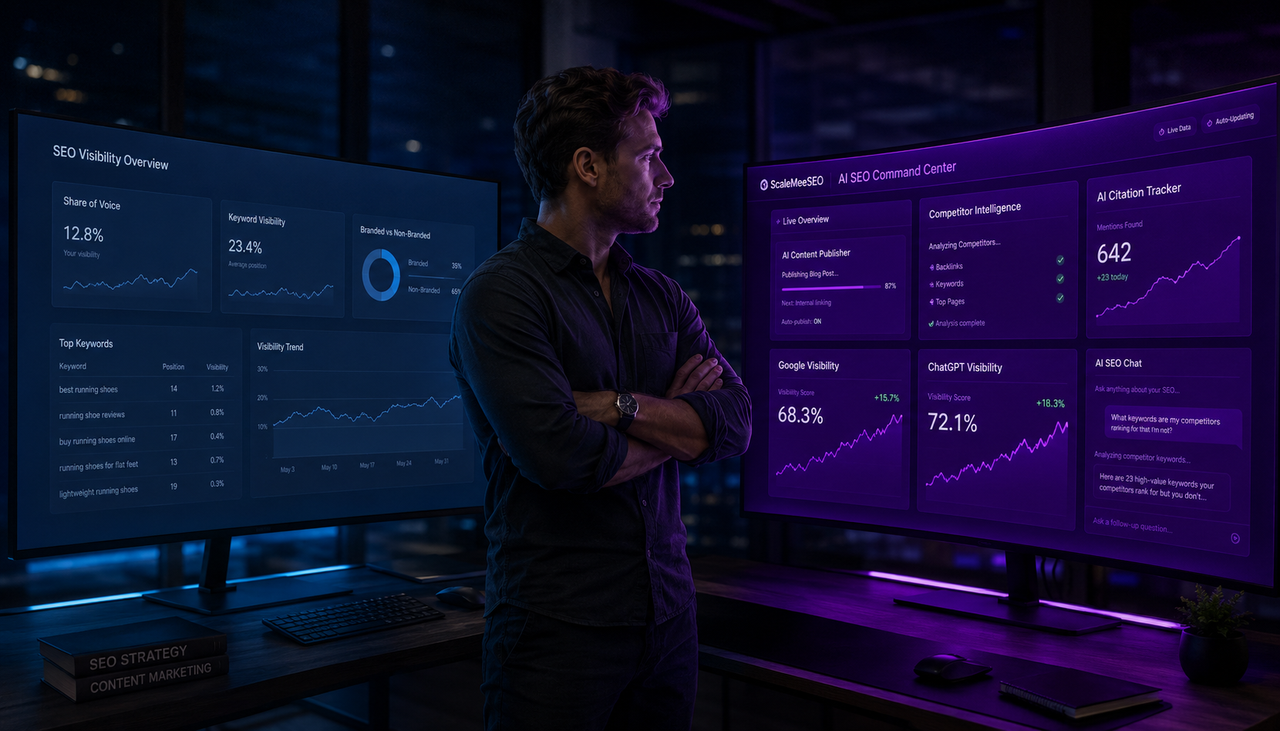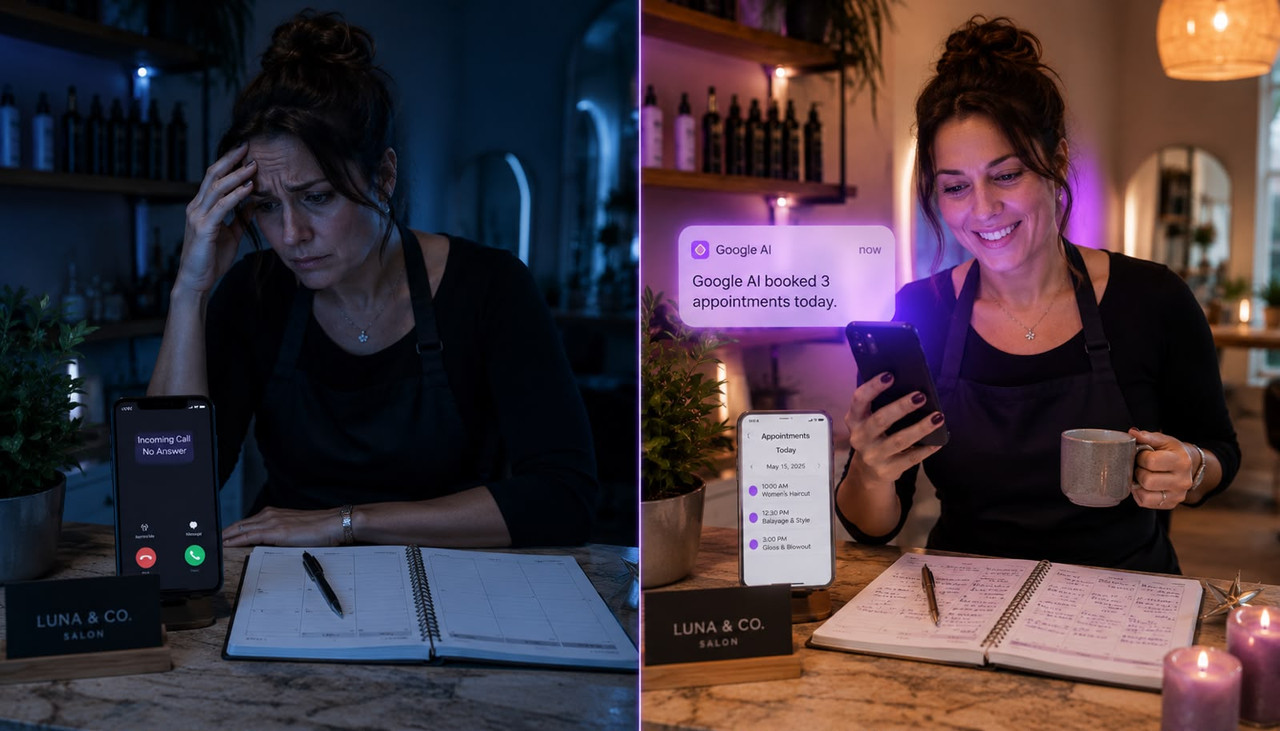
Google will now call your business on behalf of customers to check your pricing, confirm your availability, and book appointments without the customer ever dialing your number themselves. At Google I/O on May 19, 2026, Sundar Pichai announced the expansion of Google's agentic booking feature to home repair, beauty, and pet care, with a direct quote from the official Google Search blog: "For select categories like home repair, beauty or pet care, you can ask Google to call businesses on your behalf. These capabilities will roll out to everyone in the U.S. this summer." If you run a hair salon, a dog grooming service, a plumbing company, or any home repair business, your phone could ring any day this summer with Google's AI on the other end asking your prices and availability on behalf of a customer who has never spoken to you. Whether you get that call — and whether it turns into a booking — depends entirely on decisions you can make in the next two weeks.
Key Takeaways
- According to the official Google Search blog published May 19, 2026, the feature covers home repair, beauty, and pet care and rolls out to all US users this summer. Home repair includes HVAC, plumbing, electrical, and roofing. Beauty includes salons, spas, and nail studios. Pet care includes groomers, boarders, and trainers.
- According to TechCrunch's reporting on the rollout, every call to a business begins by announcing that it is an automated system calling from Google on behalf of a user. The AI asks about availability and pricing, collects a summary, and delivers it directly to the customer — who then decides whether to book. Businesses can opt out through their Google Business Profile settings.
- According to Birdeye's April 2026 Google Business Profile analysis, your first impression may now happen even if a customer never calls you directly — because Google's AI calls you first, evaluates your response, and presents a comparison summary to the customer before they ever decide to contact you personally. A slow answer, a voicemail, or a "let me check and call you back" response tells the AI your business cannot confirm availability in real time — and the customer sees that in the comparison summary.
- According to Ignite Visibility's agentic booking optimization guide, your Google Business Profile is the primary source from which the AI pulls information before it decides which businesses to call. A GBP with incomplete service descriptions, missing pricing signals, and outdated hours may not receive the AI call at all — because the agent cannot confidently match the customer's request to your business without sufficient structured data.
- According to Marketing Code's June 2026 analysis of the AI local pack, pages with FAQPage structured data are 4x more likely to be cited in AI Overviews per the May 2026 GrowthPro benchmark. If your schema returns a validation warning, the AI does not cite the page. The same principle applies to the agentic booking pipeline — structured, machine-readable service data gets selected. Unstructured, incomplete data gets skipped.
What Google's "Ask for Me" Feature Actually Does When It Calls Your Business
Google's agentic calling feature — publicly called "Ask for Me" during its initial testing phase and now rolling out broadly — works like this: a customer searches for a local service on Google, sees a prompt to "Have AI check pricing" or "Ask for me," answers a few questions about what they need and when, and Google's AI immediately calls businesses in the area on their behalf. The AI identifies itself as an automated system from Google calling on behalf of a user, asks specific questions about availability and pricing for the service the customer described, and then delivers a comparison summary to the customer showing what each business quoted.
According to TechCrunch's January 2026 reporting on the initial "Ask for Me" rollout, the feature began testing with nail salons and auto repair shops, asking questions such as the type of service needed, the make and model of the vehicle, or the specific nail service requested, along with timing preferences. For pet care, the AI asks which type of pet, which services are needed, and when the appointment is required. For home repair, it asks the type of job, the urgency, and the general scope. These are not open-ended conversations — they are structured intake questions that the AI is designed to complete in under 90 seconds.
The customer never hears your voice during this process. They receive a text or in-app summary comparing what multiple businesses told the AI — prices, availability, estimated timelines — and they make a booking decision based on that comparison. This is the structural shift that most small business owners have not registered yet: the first interaction a customer has with your business is now potentially a 90-second AI phone call that your staff either answers well or does not. If the phone rolls to voicemail, the AI notes that you were unavailable. If staff say "let me check and call you back," the AI notes that your business could not confirm availability in real time. According to Marketing Code's analysis of the I/O 2026 announcement, if your call rolls to voicemail, your front desk cannot confirm same-day service in under 30 seconds, or your team cannot quote pricing without a callback — that is the experience the booking agent compares against your competitor down the road who answered immediately and quoted clearly.
How Google Decides Which Businesses to Call and Which to Skip Entirely
Google does not call every business in your category when a customer uses Ask for Me. It calls the businesses its AI has enough structured information about to confidently match to the customer's specific request. If your Google Business Profile does not describe your services in sufficient detail for the AI to determine whether you offer exactly what the customer asked for, you do not receive the call — you are filtered out before the phone rings.
According to Ignite Visibility's agentic booking guide, your GBP is the primary source from which the AI pulls information before dialing. The guidance is specific: go beyond the main business category and include every service and micro-service you offer in its own line item with detailed descriptions. Include operational attributes that affect results — 24-hour emergency service availability, licensed and insured credentials, specific certifications, and pricing model indicators. A GBP that lists "Plumber" as its category and nothing else gives the AI no basis to match a customer searching for "emergency burst pipe repair tonight." A GBP that lists "emergency plumbing," "burst pipe repair," "water heater replacement," "same-day availability," and "licensed and insured" maps directly to that query and gets the call.
According to Jay Mehta's Google I/O and Marketing Live 2026 summary, AI-assisted discovery depends on accurate, consistent, and easy-to-understand business information. The practical implication is that the businesses receiving the most agentic booking calls this summer will be the ones who treated their GBP services tab as a machine-readable product catalog rather than a brief marketing tagline. Every service you offer that is not in your GBP services tab is a service the AI cannot match against customer requests — and every customer asking for that service goes to a competitor whose GBP lists it. For the full picture of why AI systems evaluate your digital presence the way they do, what makes a business website trustworthy to AI systems covers the entity density, structured data, and listing consistency signals that determine whether any AI system — including Google's booking agent — treats your business as a credible match for a customer query.
Your First Customer Impression Now Happens Before Anyone Speaks to You
The most significant behavioral shift in Google's agentic calling feature is not the technology — it is the sequence. In every previous era of local search, a customer found your business, read your reviews, looked at your profile, and then decided whether to call. Their first impression of you as a business came from your digital presence. Their first impression of you as a human business came from the call.
That sequence is now reversed for customers using Ask for Me. Their first direct interaction with your business is the AI call — and they are not on that call. They are receiving a summary of how your business responded. If you answered quickly and quoted clearly, the summary says that. If you put the AI on hold, quoted vaguely, or sent the call to voicemail, the summary says that too. The customer compares your summary against three other businesses and books the one that gave the clearest, fastest, most confident response — without ever speaking to any of them.
According to Birdeye's 2026 GBP analysis, businesses that include photos see 45% more direction requests and 31% more website clicks — signals that profile quality determines downstream customer behavior long before the first human conversation. The agentic calling feature extends this principle to the phone call itself: your operational quality is now being evaluated and summarized by AI before you have any chance to make a human impression. The businesses that win are the ones who treat every phone call as potentially being the Google AI agent on the other end — because they cannot tell the difference from the caller ID.
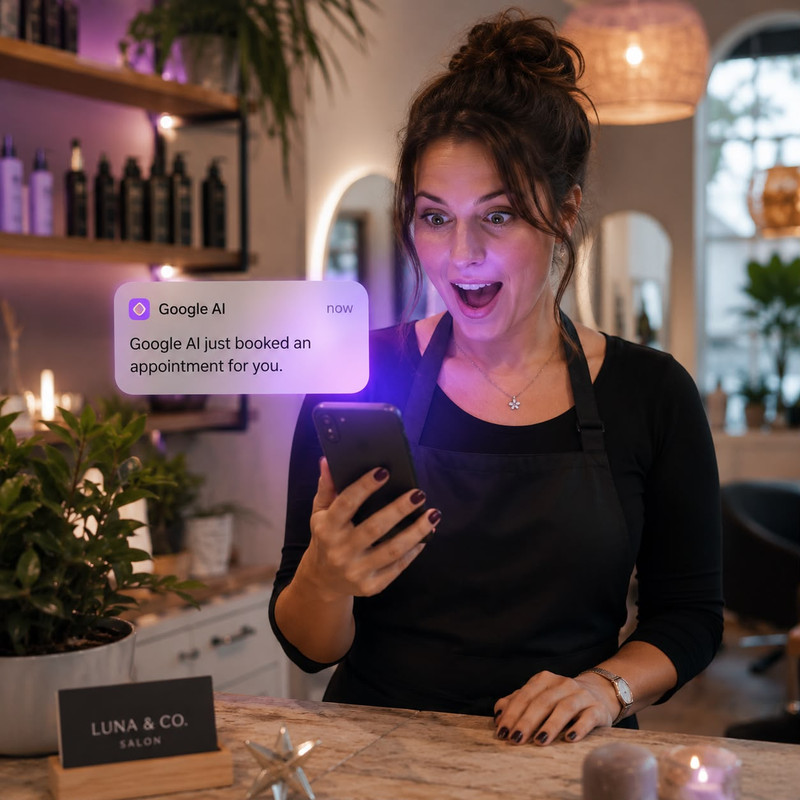
What the Google AI Agent Asks When It Calls and How to Answer It
The Google AI agent calls your business and announces itself clearly — it states it is an automated system from Google calling on behalf of a user. What happens in the next 90 seconds determines whether that customer books with you or with the competitor it called next. The agent is not making conversation. It is collecting specific structured data points to complete a comparison summary.
According to Marketing Code's contractor preparation guide, the agent evaluates five key questions when it calls: Can you confirm you offer this specific service? What is the price or pricing model? Do you have availability for the customer's requested timeframe? Are you licensed and insured for this job type? And can you confirm same-day or emergency service if requested? These five questions need answers that your staff can deliver in under 30 seconds without putting the AI on hold, without saying "let me check and call you back," and without vague responses like "it depends on the job."
The practical preparation is a one-page phone reference card for whoever answers your business line. It lists your five to ten most common services with base price ranges, confirms your availability windows, states your license and insurance credentials clearly, and identifies which services qualify for same-day response. Any staff member reading from that card can answer the Google AI agent's five questions in under 30 seconds. A business without that card puts the AI on hold or gives an uncertain answer — and that uncertainty goes directly into the comparison summary the customer reads when deciding who to book.
Businesses can opt out of the agentic calling feature entirely through Google Business Profile settings. According to Igniting Business's April 2026 advanced GBP settings guide, you can manage automated calls and messages in your Business Profile settings, including opting out after verification. The guide also flags an important secondary risk: Google's "Keep Your Profile Up to Date" setting, which is enabled by default in 2026, allows Google to update your GBP based on information given by whoever answers the phone during an automated verification call. If someone unfamiliar with your business answers and provides incorrect service or hours information, Google can update your live profile without requiring your approval. Disabling this setting prevents automated profile changes from overwriting your intentionally configured data.
Three Things to Set Up Before Google's AI Starts Calling This Summer
The rollout window Google announced is US summer 2026 — which means June, July, and August. According to Marketing Code's preparation timeline, treating July 1 as the practical readiness deadline gives you enough time to complete the three non-negotiable setup items before the feature reaches full rollout volume. None of these require a developer. All three can be completed this week.
Step 1 — Complete your GBP services tab as a machine-readable service catalog. Open your Google Business Profile and go to the Services tab. List every service you offer as a separate named entry with a description. Do not use marketing language. Use the exact words customers use when searching — "dog bath and trim," "emergency water heater replacement," "balayage color," "gel nail manicure." Each service should have a price or price range if your model supports it, and each should include the specific attributes that affect booking decisions: same-day availability, emergency service, licensed and insured, specific breed experience, or certification credentials. According to Ignite Visibility's guide, the GBP services field is the primary data source the AI queries before deciding which businesses to include in its calling list. If your service is not listed, you do not receive the call for that service type.
Step 2 — Add a booking integration to your GBP. Google's agentic booking pipeline delivers the highest conversion rate when customers can complete the appointment directly through a booking link rather than calling back to schedule. According to SimplerBook's March 2026 GBP booking guide, connecting a scheduling tool to your GBP adds a booking button directly to your listing that Google's AI can reference when completing the booking loop after the initial call. Tools including Housecall Pro, ServiceTitan, Vagaro, and Square Appointments all integrate with GBP's booking endpoint. According to Marketing Code's June 2026 analysis, Housecall Pro and ServiceTitan have one-click toggles to expose 30 days of forward availability to the agentic booking endpoint. If your scheduling platform does not have a GBP booking integration, contact your vendor this week and ask for their agentic booking roadmap.
Step 3 — Prepare your phone team for AI calls. Create a one-page quick reference card for every staff member who answers your business line. The card covers your five most requested services with base pricing, your availability windows for the current week, your license and insurance credentials in one sentence, and whether you offer same-day service. When the Google AI agent calls and announces itself, staff with this card can answer all five qualifying questions clearly within 30 seconds. Test your own readiness right now by calling your business from an unknown number and timing how long it takes to get a clear price and availability answer. If that answer takes longer than 30 seconds or ends with "let me check and call you back," that is what your comparison summary looks like to every customer the agent calls on behalf of.
Why Your Website Needs to Be AI-Ready Before Google Calls You This Summer
The agentic calling feature is the front end of a pipeline that starts before the phone rings. Google's AI builds its understanding of your business from your GBP, your website, your reviews, and your structured data — and it uses that understanding to decide whether to include you in the calling list at all. A business with an incomplete GBP and a website that has no structured service content is a business the AI cannot confidently represent to a customer — and a business the AI cannot confidently represent does not get called.
According to Agency Jet's January 2026 GBP strategy guide, Google now cross-references your website's service descriptions with your GBP services tab to verify your expertise. These tactics show Google that your website and profile are aligned and consistent. A website with detailed, structured service pages that match your GBP entries tells the AI agent that this business knows what it does and communicates it clearly. A website with a generic homepage and no individual service pages tells the AI the opposite.
The specific content format that produces the highest AI citation and selection rate for service businesses is answer-first structured pages — one page per service, opening with a direct description of what the service includes, who it is for, how long it takes, and what it costs, followed by FAQ content answering the questions the AI agent and the customer are most likely to ask. According to Marketing Code's June 2026 analysis, pages with FAQPage structured data are 4x more likely to be cited in AI Overviews — and the same citation preference applies to the agentic booking selection process. For businesses in home repair, beauty, and pet care who want this content published and maintained consistently without managing a separate content workflow, automated SEO platforms that connect service keyword research to structured page generation and direct website publishing, Scalemee being one built specifically for local service businesses who need AI-ready content without a content team, produce the kind of service pages that give Google's AI agent the structured data it needs to confidently select your business and call. Understanding which types of websites AI systems cite and recommend most explains exactly why structured, answer-first service content is the website investment that produces the highest return in the agentic search era — not just for ChatGPT citations, but now for Google's booking agent selecting which businesses to call on behalf of customers.
Frequently Asked Questions About Google Calling Your Business on Behalf of Customers
What is Google's "Ask for Me" feature and how does it work for local businesses?
Ask for Me is Google's agentic booking feature that calls local businesses on behalf of customers to check pricing and availability. A customer searching for a local service sees a prompt to have Google AI check pricing for them, answers a few questions about what they need and when, and Google's AI immediately calls businesses in the area announcing itself as an automated system from Google. It asks structured questions about services, pricing, and availability, collects the answers, and delivers a comparison summary to the customer who then decides whether to book. According to the official Google Search blog published May 19, 2026, the feature is rolling out to all US users this summer for home repair, beauty, and pet care categories.
Will Google's AI call my business even if I have not set anything up?
Yes — if you are in the home repair, beauty, or pet care categories and you have a verified Google Business Profile, Google's AI may call your business this summer whether you have prepared for it or not. The difference is whether the call produces a booking. An unprepared business that puts the AI on hold, cannot quote pricing, or routes the call to voicemail gets a negative summary in the customer comparison. A prepared business that answers immediately, quotes clearly, and confirms availability wins the booking. You cannot prevent the call by doing nothing — you can only determine whether it converts by preparing for it.
Can I opt out of Google's agentic calling feature?
Yes. According to Igniting Business's April 2026 advanced GBP settings guide, you can manage automated calls and messages in your Google Business Profile settings, including opting out after verification. Navigate to your GBP dashboard at business.google.com, go to Settings, and look for the automated calls management option. Opting out means Google's AI will not call your business on behalf of customers — but it also means your business does not appear in the comparison summaries those customers receive when deciding who to book. For most service businesses in the covered categories, opting in and preparing for the calls is more commercially valuable than opting out.
What questions does the Google AI agent ask when it calls my business?
The agent collects the five data points customers need to make a booking decision: confirmation that you offer the specific service requested, your price or pricing model for that service, your availability for the customer's preferred timeframe, your license and insurance credentials for service categories where they are relevant, and whether you can accommodate same-day or emergency requests if the customer's query indicated urgency. These are structured intake questions designed to be answered in under 90 seconds. The agent summarizes the answers and delivers them to the customer alongside responses from competing businesses in the area.
How do I make sure Google's AI calls my business and not just my competitors?
Complete your GBP services tab with every specific service you offer listed by name — not your category name alone. Include price ranges, operational attributes like same-day availability and licensed status, and service-specific descriptions using the exact language customers use when searching. According to Ignite Visibility's agentic booking guide, your GBP is the primary source from which the AI pulls information before deciding which businesses to call. A GBP without detailed service entries does not receive calls for those service types because the AI cannot confirm you offer what the customer requested. The businesses receiving the most agentic booking calls this summer are the ones who treated their GBP services tab as a structured service catalog, not a marketing tagline.
Does my website affect whether Google's AI includes my business in the booking calls?
Yes. According to Agency Jet's 2026 GBP guide, Google now cross-references your website's service descriptions with your GBP services tab to verify your expertise and service consistency. A website with structured service pages that match your GBP entries strengthens the AI's confidence in your business as a match for specific customer requests. A website with a generic homepage and no individual service pages provides no corroborating signal. Pages with FAQPage structured data are 4x more likely to be cited in AI Overviews — the same citation preference that applies to AI booking agent selection. Structured, answer-first service pages on your website are the website investment with the highest direct return in the agentic search era.
What should my staff say when Google's AI calls my business?
The agent announces itself as an automated system from Google calling on behalf of a user. Your staff should treat it like any high-priority customer call and immediately be ready to answer: what services you offer from the list the agent mentions, your pricing or price range for each, your earliest available appointment slot, your license and insurance status, and whether you offer same-day service. Prepare a one-page quick reference card for every staff member covering these five points for your most common service requests. If the call goes to voicemail or if staff respond with "let me check and call you back," that uncertainty appears directly in the comparison summary the customer uses to decide who to book.
Which business categories does Google's agentic calling feature cover in 2026?
According to the official Google Search blog published May 19, 2026, the three categories explicitly named in the I/O announcement are home repair, beauty, and pet care. Home repair includes HVAC, plumbing, electrical, roofing, and general contracting. Beauty includes hair salons, nail studios, spas, and personal care services. Pet care includes groomers, boarders, trainers, and veterinary services in some markets. The feature began testing with nail salons and auto repair shops in January 2026 and has since expanded. Additional service categories are expected to be added after the initial US summer rollout based on performance data from the three launch verticals.
Google's AI calling your business on behalf of customers is not a future development to monitor — it is a current rollout arriving this summer for every home repair, beauty, and pet care business in the United States. The businesses that prepare in the next two weeks will receive calls that convert. The businesses that do not will receive calls that produce unfavorable comparison summaries, or no calls at all because their GBP was too incomplete for the AI to match against customer requests. Complete your GBP services tab today. Prepare your phone team's five-question reference card this week. Connect a booking integration to your GBP before July. Those three actions take under four hours total and are the difference between benefiting from the single most significant local search change in years and being systematically excluded from it. For local businesses in any service category facing this new AI-mediated discovery landscape, why local service businesses get ignored during high-intent searches covers the foundational GBP, review, and content signals that determine which businesses AI systems select in every high-intent local query — the same signals now driving Google's agentic booking decisions.